
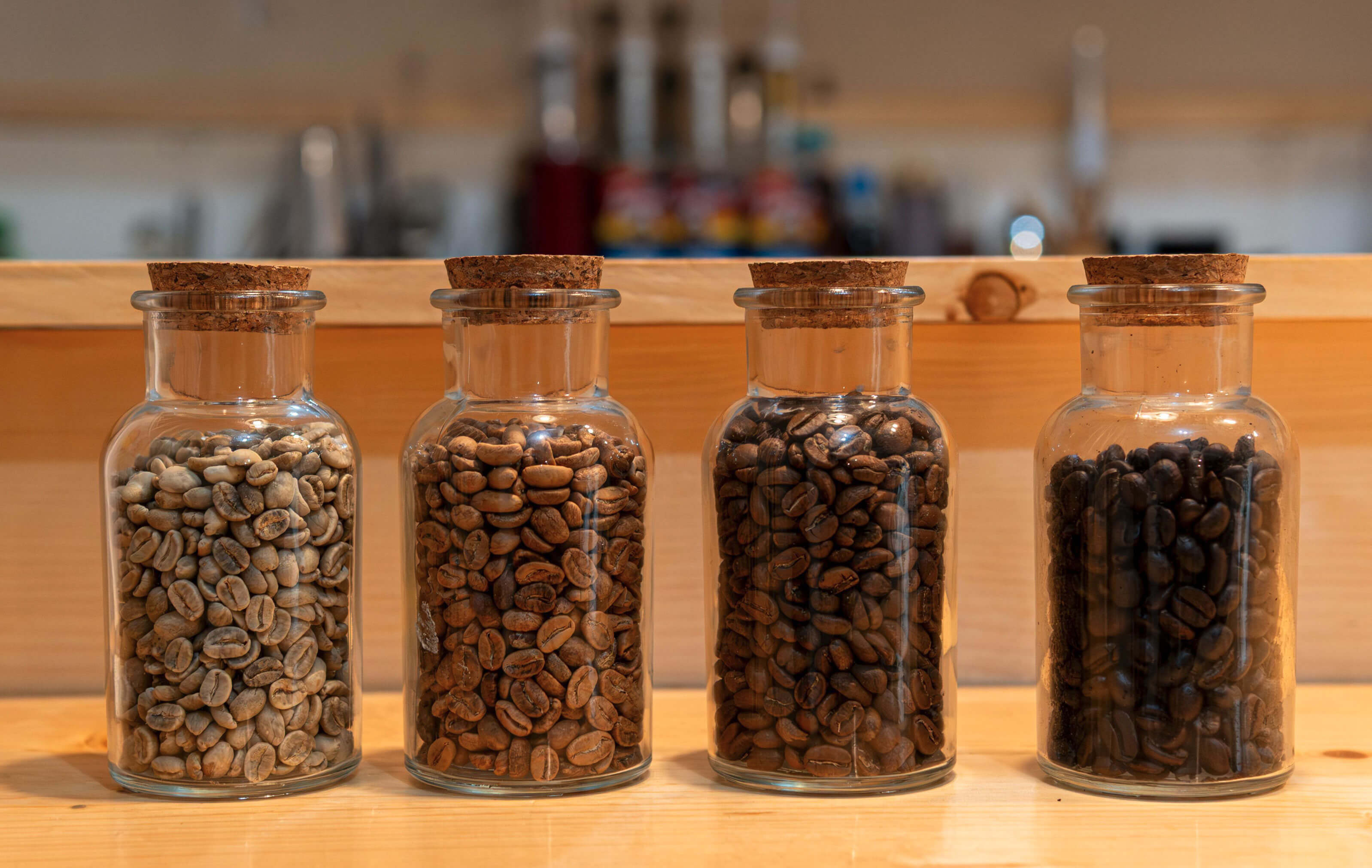
In San José del Cabo, the heat isn't just in the desert air—it’s in the drum. Understanding how a bean is transformed from a green seed to a complex cup is the difference between "drinking coffee" and "experiencing a terroir."
I. The Roast Spectrum
The roast level is the "volume" of the bean's voice. Too quiet, and you miss the origin; too loud, and all you hear is the fire.
Light Roast (The Origin Voice)
Dropped shortly after the "first crack." These beans are dry and light brown. Expect high acidity, floral notes, and tea-like bodies.
Best for: V60, Chemex, and Siphon.
Medium Roast (The Balanced Harmony)
A rich brown color with a balanced profile of acidity and sweetness. This is where the sugars caramelize into notes of milk chocolate and toasted nuts.
Best for: AeroPress, Switch, and Drip.
Dark Roast (The Bold Texture)
Shiny with surface oils. The origin notes fade, replaced by smoky, bittersweet, and heavy-bodied characteristics.
Best for: Vietnamese Phin or traditional Espresso.
II. Identifying the Flaws: The "Bad Bean" Audit
In a world of mass production, SLOW stands for quality. Here is how to spot a "bad" roast or a defective bean before it hits your grinder:
Quakers
These are beans that don't roast properly because they were picked underripe. They stay light/yellowish even in a dark roast. They taste like dry cereal or paper.
Scorching
Dark, burnt patches on the flat surface of the bean. This happens when the roaster drum is too hot, resulting in an acrid, smoky, "burnt toast" flavor.
Tipped Beans
The ends (tips) of the beans look charred or "popped." This is a sign of thermal shock during the roasting process, leading to a bitter, metallic aftertaste.
Oil Seepage (Premature)
If a light or medium roast is covered in oil, it may have been stored poorly or roasted too fast. Freshness is key—if it smells like old crayons, the oils have gone rancid.
III. The Grind Geometry
Your grind size is the "gatekeeper" of extraction. Match your grind to your method to unlock the intended flavor profile.
Extra Fine (Powdered Sugar): Flair Espresso / Ibrik
Fine (Table Salt): AeroPress / Moka Pot
Medium-Fine (Sand): V60 / Ceramic Dripper / Hoop
Medium (Sea Salt): Switch / Flat-bottom Drip
Coarse (Kosher Salt): Chemex / French Press
Extra Coarse (Peppercorns): Cold Brew (OXO Rapid)
IV. The San José Roasting Scene
We don't work in a vacuum. San José del Cabo has a vibrant community of roasters, each bringing a different philosophy to the Baja coast.
Hibrido Roasters
The technical innovators. They focus heavily on the science of the roast, often providing incredibly consistent profiles that work beautifully for modern methods like the Hoop or V60.
Tamarindos Coffee Roasters
Bringing the farm-to-table (or farm-to-cup) ethos. Their roasting style tends to honor the earthiness of Mexican origins, perfect for those who enjoy a robust Medium Roast with clear chocolate undertones.
Don Rooster
The local staple for reliability. They offer a range that bridges the gap between traditional palates and specialty explorers, making them a great choice for AeroPress or Phin preparations.
At SLOW, we curate our selection from these local masters and beyond, ensuring that every bean we serve has passed our rigorous quality audit for "Baja Perfection."