
The Window
There is a moment in every bean's life — brief, volatile, irreversible — when its aromatic complexity reaches an apex. The roasting has unlocked the volatile compounds. The degassing has stabilized. The sugars, acids, and oils exist in a balance so precise that it will never occur again. This window opens roughly 10 days post-roast and closes by day 14. After that, oxidation and staleness begin their quiet work, and the bean becomes a shadow of what it briefly was.
At SLOW, this window is not a guideline. It is a religion. Every bean we serve — in every drip, every flight, every act of the Omakaffee — is consumed within this fleeting 10-to-14-day corridor. It is the single most important variable in our pursuit of peak expression, and it is the one that most coffee shops ignore entirely.
The Event
On January 18th, Alonso led a small group of guests through an experience we have been designing for months: The 14-Day Peak — an intimate tasting event that makes the invisible visible.
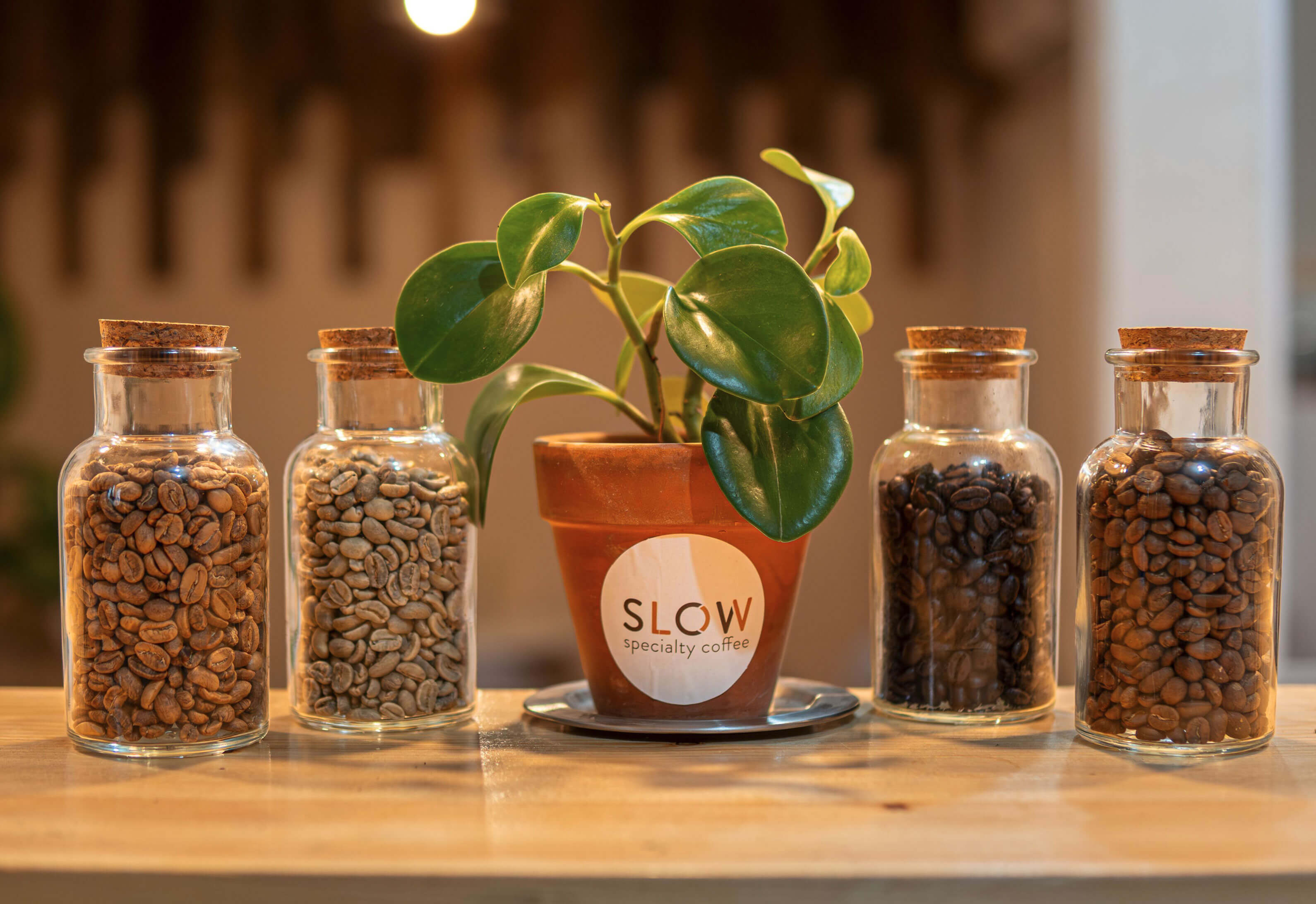
The format was deceptively simple. Six specialty-grade beans, each from a different Mexican origin — Oaxaca, Veracruz, Chiapas, Puebla, Guerrero, and a rare Baja micro-lot. Each bean was roasted identically, in the same batch profile, by the same hand. The only variable: time.
Guests tasted each bean at three stages:
- Day 5 post-roast — the volatile, unstable youth. CO₂ still escaping. Bright, aggressive, unresolved.
- Day 10 post-roast — the opening of the window. Complexity emerging. Sweetness arriving. The first moment the bean truly speaks.
- Day 14 post-roast — the peak. Every compound in alignment. The fullest, most nuanced expression the bean will ever achieve.
The difference was not subtle. It was staggering. The same Chiapas Geisha that tasted of raw grain and carbonic bite at Day 5 became a symphony of white jasmine, bergamot, and stone fruit by Day 14. The Puebla natural that was thin and acetic in its youth blossomed into dark chocolate and dried cherry at its peak.
Why It Matters
Most specialty coffee is consumed too young or too old. Roasters ship immediately; cafés serve from inventory. The bean that reaches your cup has usually passed through a supply chain that respects freshness as a marketing term, not a scientific reality.
At SLOW, we work directly with Selvaggio Roasters and Los Cabo's Coffee Roaster to control the timeline from roast to cup. Every origin in our rotation is profiled by Alonso at multiple post-roast stages, and we only begin serving it when the window opens. When it closes, we retire it — regardless of how much remains in the bag.
This is not efficiency. It is integrity. And it is the reason that a $100 MXN drip at SLOW tastes different from the same bean at a café that bought it three weeks ago.
The Next Chapter
The 14-Day Peak was our first tasting event, but it will not be our last. We are developing a recurring series — each edition exploring a different variable that shapes flavor: altitude, processing method, water chemistry, grind geometry. The goal is not education for its own sake, but a deepening of the conversation between SLOW and the people who trust us with their palate.
If you attended the first Peak and want to be notified of future events, subscribe to The Slow Dispatch or inquire via WhatsApp. Space is limited by design — because intimacy is the variable that no technology can replace.
The finest things are also the most ephemeral. We brew accordingly.